 Lemon
Lemon Mandarin
 Orange
 Grapefruit
 Fruits
 Vegetables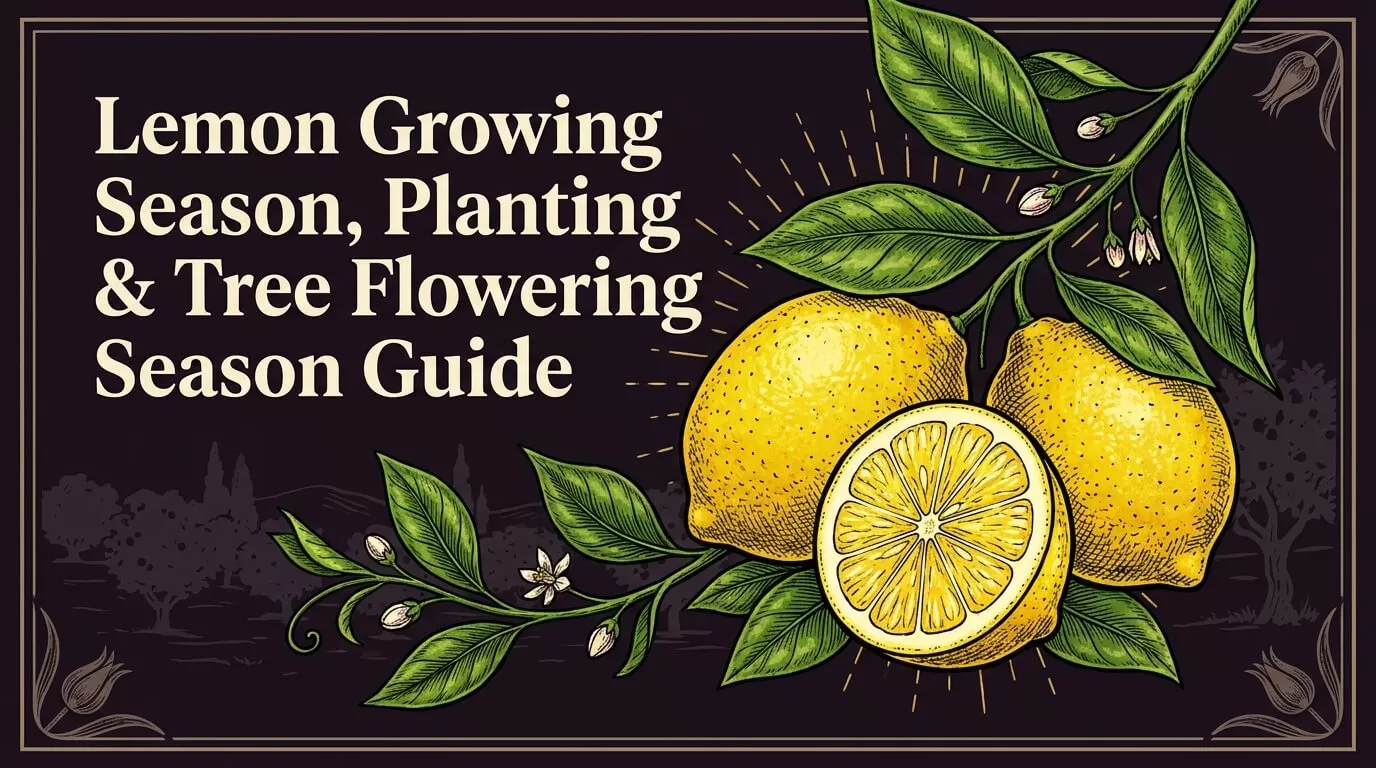
Lemon Growing Season, Planting & Tree Flowering Season Guide
If you've ever bitten into a perfectly ripe, juicy lemon and wondered how it got so good, the answer almost always comes down to timing. Understanding the lemon growing season, when to plant, and when those gorgeous white blossoms appear can make all the difference — whether you're a backyard gardener, a buyer sourcing fresh citrus, or just someone who loves knowing where their food comes from.

Your Complete Guide to Lemon Growing Season, Planting & Flowering
Lemons are genuinely fascinating fruits. Unlike most citrus varieties, lemon trees don't follow a simple once-a-year production cycle. They're considered nearly everbearing in Mediterranean climates, which means they can produce fruit in multiple flushes throughout the year. That said, the main commercial harvest window in Turkey and across the broader Mediterranean basin typically runs from October through March, peaking between November and February. Pretty impressive for a single tree, right?
Global lemon production is a big deal — worldwide output of lemons and limes exceeds 19 million tonnes annually according to FAO data. The leading producers include Mexico, India, China, Argentina, Brazil, Spain, Turkey, and the United States. Each of these regions has its own rhythm when it comes to growing and harvesting, shaped by local climate, soil, and variety preferences.
When Is the Lemon Growing Season?
The lemon growing season isn't a single fixed window — it's more of a rolling calendar that depends heavily on where you are in the world. In Turkey, for instance, the Çukurova region (which covers Mersin and Adana provinces) and the Aegean coast around İzmir are the heartland of lemon production. These areas benefit from classic Mediterranean conditions: mild winters, hot summers, and just the right amount of sunshine to coax out the best fruit.
Turkey's Mersin province alone accounts for roughly 60–70% of the country's total lemon output, with commercial varieties like Eureka and Lisbon dominating the fields. For anyone interested in understanding the full lemon season guide from blossom to basket, Turkey's production calendar is a great reference point.
| Country | Main Harvest Season | Key Growing Region |
|---|---|---|
| Turkey | October – March | Mersin (Çukurova), İzmir |
| Spain | October – May | Murcia |
| United States | Year-round (peaks vary) | California, Florida |
| Argentina | March – September | Tucumán |
Spain offers another interesting case study. In the Murcia region, the Primofiori variety is harvested from October through February, while the Verna variety runs from January all the way to June. This variety-based approach shows just how much flexibility exists in managing a lemon growing calendar across different markets and demands.
Lemon trees need a temperature sweet spot of around 15–30°C (59–86°F) for optimal growth. They're actually the most cold-sensitive of the common commercial citrus fruits, and temperatures below -3°C (27°F) can cause serious damage. This cold sensitivity directly shapes which regions can grow lemons commercially and when planting is safest.
Understanding the Lemon Planting Season
Getting the lemon planting season right is one of the most important decisions a grower can make. Plant too early and you risk frost damage; plant too late and the tree struggles to establish itself before the brutal summer heat kicks in.
In Mediterranean and subtropical climates, late winter to early spring — roughly February through April — is the sweet spot for planting. In USDA hardiness zones 9–11, both container-grown and nursery transplants can go in the ground in early spring or early fall. California's UC Cooperative Extension advises planting after the last frost, ensuring trees get at least 6–8 hours of full sun daily for healthy fruit development.
Planting Tips for the Best Results
- Always use grafted nursery stock — grafted trees start bearing fruit in 3–5 years, while seed-grown trees can take 6–10 years
- Choose well-drained soil and a full-sun location
- In Turkey, orchards are typically established in March–April using grafted stock
- Rootstock choice (Rough Lemon, Sour Orange, Swingle Citrumelo) significantly impacts productivity and disease resistance
- Avoid planting during any frost risk period — even a brief cold snap can set a young tree back significantly
In Florida and similar subtropical climates, spring planting from March through May is the go-to approach, giving trees enough time to establish roots before the rainy summer season and before the following winter chill arrives.

The Lemon Tree Flowering Season Explained
Here's where lemons really separate themselves from other citrus fruits. The lemon tree flowering season isn't a single annual event — lemon trees can have up to five distinct bloom periods per year. This polycyclic flowering habit is what gives lemons their near-continuous production capability, something oranges and grapefruits simply can't match.
There are three primary bloom periods to know about:
- Spring bloom (March–May): The main event — largest and most commercially significant
- Summer bloom: A secondary flush that adds to the season's yield
- Fall bloom: A lighter flowering that contributes to the winter harvest
Because lemon fruit takes approximately 6–9 months from flowering to full maturity (depending on variety and climate), multiple fruit cohorts of different ages coexist on the same tree at the same time. It's genuinely a beautiful and efficient system.
Meyer Lemon Flowering — A Special Case
Meyer lemons (Citrus × meyeri), which are a hybrid between a lemon and a mandarin orange, behave a little differently. They tend to bloom more prolifically and earlier than Eureka or Lisbon types, with heavy spring flowering and a peak fruit harvest falling between November and January. Their popularity in home gardens and specialty markets has been growing steadily for good reason.
Self-Pollination and Bee Activity
One of the more convenient facts about lemon trees is that their flowers are self-fertile. A single tree can produce fruit without needing a second tree nearby. That said, bees and other pollinators do improve fruit set, so a garden with good pollinator activity will generally yield better results. Those fragrant white-purple-tinged blossoms you see on new growth flushes? They're not just pretty — they're working hard.
| Bloom Period | Timing | Commercial Importance |
|---|---|---|
| Spring Bloom | March – May | High (primary crop) |
| Summer Bloom | June – August | Moderate |
| Fall Bloom | September – November | Moderate (feeds winter harvest) |
Frequently Asked Questions About Lemon Seasons
When do lemon trees produce the most fruit?
The peak commercial harvest in most Mediterranean regions, including Turkey, runs from November through February. However, because of the polycyclic bloom habit, some fruit is available nearly year-round under favorable conditions.
How long does it take for a lemon tree to bear fruit after planting?
Grafted nursery trees typically begin bearing fruit within 3–5 years. Seed-grown trees, however, can take anywhere from 6–10 years to produce a meaningful harvest, which is why most commercial growers always go the grafted route.
Can lemon trees grow in cold climates?
Not comfortably. Lemon trees are the most cold-sensitive of the common commercial citrus fruits. They thrive between 15–30°C and can suffer serious damage once temperatures dip below -3°C. USDA hardiness zones 9–11 are the safest bets for outdoor cultivation.
Is Turkey a major lemon producer?
Absolutely. Turkey is among the world's leading lemon producers, with the Mersin province contributing 60–70% of national output. The region's Mediterranean climate is practically tailor-made for citrus cultivation.
Why Source Lemons From Turkey?
When it comes to fresh citrus sourcing, few regions can compete with Turkey's combination of climate, soil quality, and export infrastructure. Turkish fruits and vegetables exporters have built a strong global reputation for quality and consistency, and lemons are one of their flagship products. The vegetable export business coming out of Turkey has expanded dramatically in recent decades, with companies now serving markets across 63 countries spanning Europe, Asia, Africa, and North America. Among the leading vegetable exporting countries, Turkey consistently ranks near the top thanks to its diverse growing regions and well-developed logistics networks.
Fresh Anatolia, operating under the Eren umbrella established in Mersin in 1993, has been at the heart of Turkey's citrus export story for over three decades. Starting as a focused citrus exporter to Russia and South Europe, the company grew into one of Turkey's most trusted names in fresh produce, now offering over 60 product varieties and serving 63 countries worldwide. With their own production facility in the Tarsus region, advanced optical sorting technology, a dedicated quality control department, and logistics solutions covering trucking, container, reefer, and air cargo, they've got the full picture covered from grove to global market.
Ready to connect with a trusted lemon supplier who understands every stage of the growing, planting, and flowering cycle? Reach out to Fresh Anatolia today and discover what decades of citrus expertise and a genuine passion for quality can do for your supply chain.