 Lemon
Lemon Mandarin
 Orange
 Grapefruit
 Fruits
 Vegetables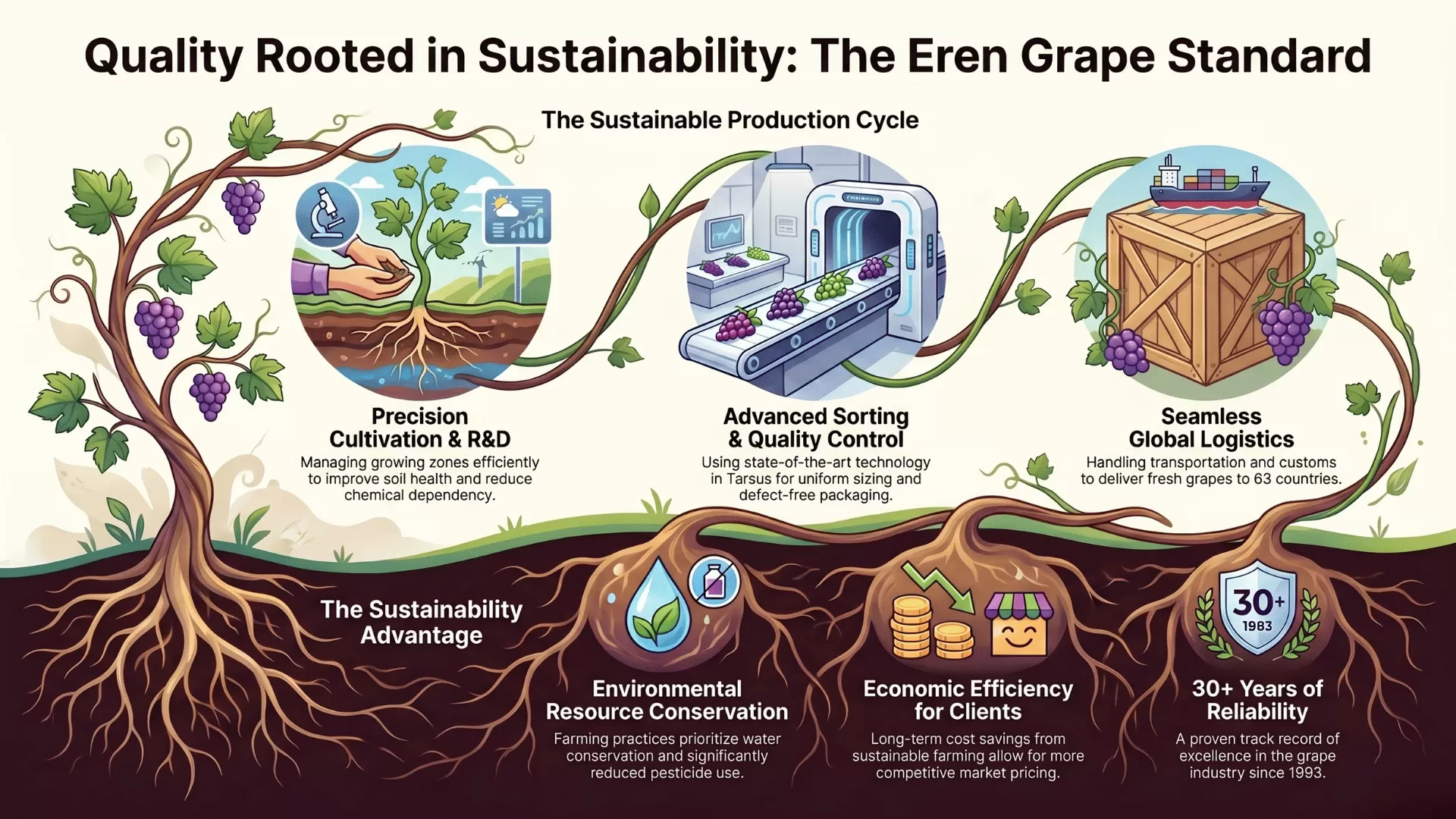
Grape Lovers' Guide: When to Harvest Grapes & How a Turkish Grape Grower Produces Grapes Sustainably!
📋 Table of Contents
Are you facing challenges with inconsistent grape quality and sustainability in your supply chain? As a fresh produce importer, wholesaler, and supplier, knowing which season grapes are at their best will allow your buyers to receive consistently high-quality produce. Sourcing high-quality grapes at the proper harvest stage from a trusted sustainable grape producer ensures your buyers enjoy the vibrant color, balanced sweetness, and crisp texture that premium Turkish grapes deliver to global markets.
Timing is everything in produce, and with grapes, no exception. Understanding how to produce grapes sustainably and the seasonal harvest windows that deliver peak quality is a critical issue for companies seeking the best variety in its best form. For businesses also sourcing other premium fresh fruits from Turkey, Eren's comprehensive portfolio covers the full seasonal calendar from spring through winter. Let's have a glance at best practices in grape sourcing and how Eren ensures your shipments arrive at their best.
How and When to Harvest Grapes for Maximum Freshness
Harvesting grapes at the proper stage is critical for freshness, taste, and shelf life. Factors involved in harvesting depend on variety, climate, and purpose of use. In general, grapes should be harvested at full maturation but not over-mature.
- When is grape season in Turkey? Turkey's unique climate and soil conditions make it an ideal location for grape cultivation — peak fresh grape harvest runs from August through October, with early varieties arriving in July and late-season grapes extending through November, providing international wholesale buyers with a continuous summer-to-autumn supply window for both table grapes and processing varieties.
- How and when to harvest grapes for export quality? Grapes are best harvested when displaying full cluster development, consistent variety-appropriate color, balanced sugar-acid ratio, and firm berry texture — harvesting at precisely this maturity stage by managing grape growing zones efficiently delivers the uniformity in size, defect-free appearance, and shelf life that wholesale buyers need for successful international distribution.
- Why does sustainable grape production matter for wholesale buyers? Sustainable farming practices including water conservation, improved soil health, and reduced chemical fertilizer and pesticide use produce grapes of consistently higher quality — while also lowering long-term production costs that can be passed on to buyers as competitive pricing on high-quality grapes sourced from a responsible Turkish grape grower.
Understanding the Optimum Grapes' Harvesting Period
Knowing which season grapes are at their best helps companies organize procurement and distribution efficiently. Here is the harvesting period for key grape producing regions:
- Turkish grape (early table varieties) harvesting period: July – August
- Turkish grape (main season / green and red table) harvesting period: August – October
- Turkish grape (late season / seedless) harvesting period: September – November
- Italian / Spanish grape harvesting period: August – October
- Chilean grape (Southern Hemisphere) harvesting period: January – April
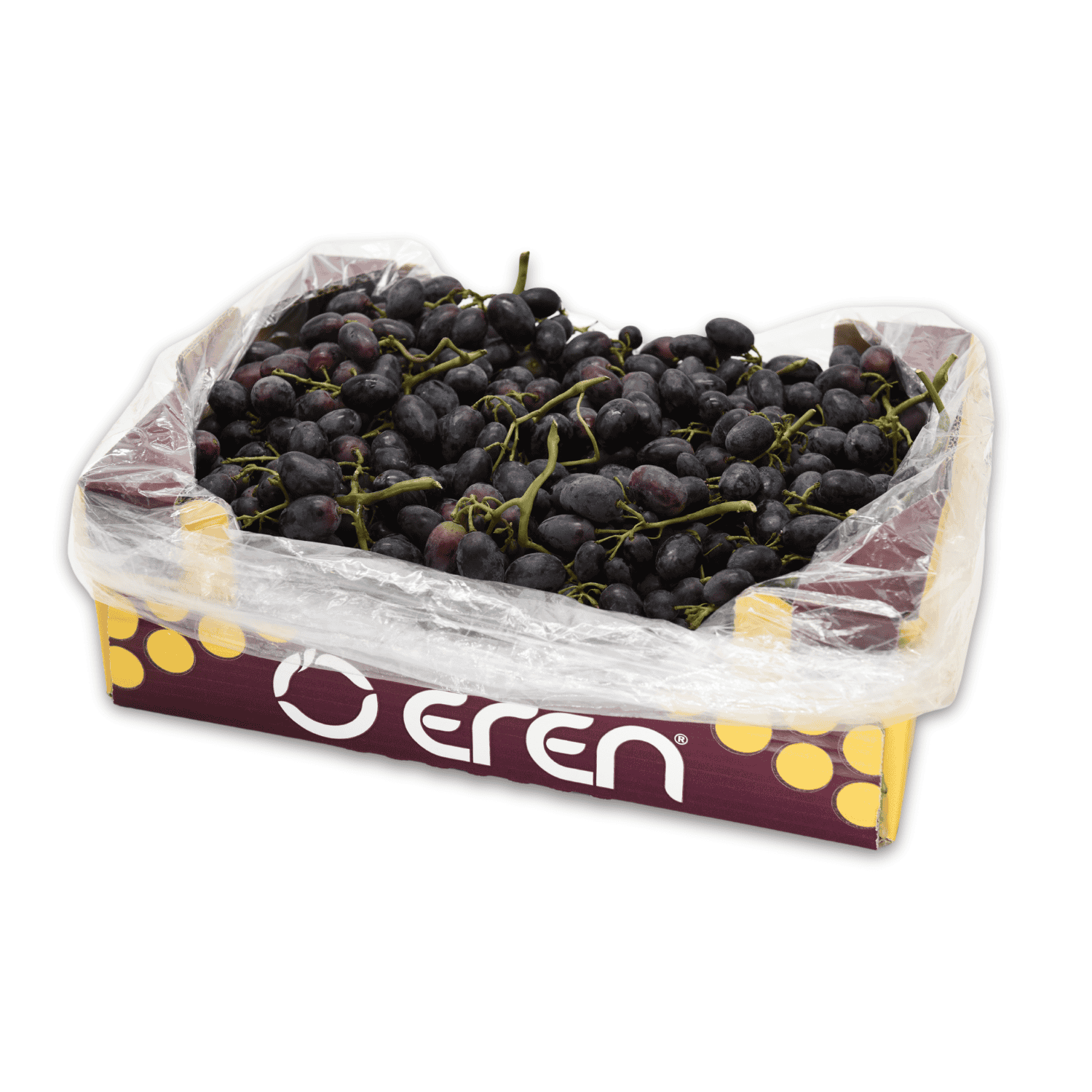
Guaranteed Fresh Grape Supply →
Why Timing is of Essence: How Timing of Grape Harvesting Can Impact Business
Grape wholesale dealers and importers depend on timely procurement at an ideal stage of ripeness to maximize customer satisfaction and extend shelf life. Inconsistent grape quality from unreliable producers creates compounding business challenges that directly damage buyer reputation and profitability.
- Ordering a batch of grapes only to find quality varies greatly is a common issue that affects business reputation and bottom line — inconsistent grape clusters, varied berry sizes, or defect-ridden fruit that fails retail quality standards creates customer dissatisfaction and operational headaches that only a committed sustainable grape producer with advanced sorting technology can systematically prevent.
- Grape cultivation depends heavily on managing growing zones efficiently and applying sustainable practices at each stage — from soil health management and water conservation through to harvest timing and post-harvest handling — any failure at these stages compounds into quality inconsistency that undermines the wholesale buyer's ability to deliver reliable produce to their own clients.
- Businesses dependent on citrus exports or other seasonal categories who have not yet established Turkish grape sourcing partnerships are missing a strategically valuable summer-to-autumn fresh fruit category that complements year-round procurement planning and reduces the supply gap between stone fruit and winter citrus seasons.
Global Grapes' Market and Industry Trends
The global grape market is diverse and dynamic — with cultivation history spanning 6,000–8,000 years in the Near East and grapes today representing one of the world's most valuable agricultural crops, providing significant income for farmers and playing a crucial role in agricultural economies across Turkey, Italy, Spain, Chile, and beyond. Turkey's unique climate and soil conditions position it as a leading supplier of premium fresh table grapes for international wholesale markets seeking consistent quality, competitive pricing, and reliable summer-to-autumn supply continuity.
Sustainable grape production is increasingly a core procurement criterion for regulated European and North American import markets — with buyers prioritizing suppliers who conserve water, improve soil health, and reduce chemical inputs as part of their environmental compliance and corporate responsibility commitments. The global shift toward seedless table grape varieties, combined with growing demand for organically grown grapes, is shaping Turkish grape export strategy — with Eren's continuous R&D investment ensuring it stays at the forefront of variety development, sustainable farming innovation, and quality consistency that international wholesale buyers increasingly require as baseline sourcing standards.
Eren's Methods for Maintaining Quality in Grapes' Harvest and Exportation
Eren, a renowned Turkish grape grower since 1993, operates a state-of-the-art facility in Tarsus and now serves 63 countries with a comprehensive range of fresh fruits and vegetables — with sustainable grape production at the core of its commitment to quality excellence. Here's why companies prefer working with Eren:
- Advanced techniques for grape cultivation including sustainable farming practices that conserve water, improve soil health, and reduce chemical fertilizer and pesticide use — delivering both environmental benefits and consistent premium quality across all grape varieties and seasons.
- State-of-the-art facility in Tarsus using the latest sorting, sizing, and quality control technology — ensuring grapes are uniform in size, free from defects, and ready for consumption when they reach buyer markets worldwide.
- Dedicated R&D team continuously exploring new techniques and technologies to enhance quality and sustainability — staying ahead of market trends in seedless varieties, organic production, and sustainable farming innovation.
- Proven track record of quality and reliability with personalized service tailored to each client's specific packaging, labeling, and logistics requirements across 63 diverse international markets.
- Comprehensive logistics capabilities including trucking, container, reefer, and air cargo — with deep expertise in customs procedures and international shipping ensuring grapes arrive on time and in perfect condition to any global destination.

Your Reliable Turkish Grape Partner →
Turkish Grape Grower and Sustainable Production: FAQ
- How does Eren produce grapes sustainably? Eren adopts sustainable farming practices including advanced water conservation techniques, soil health improvement programs, and reduced chemical fertilizer and pesticide use — combined with continuous R&D investment in new cultivation techniques that lower environmental impact while delivering consistently higher-quality grapes to wholesale buyers at competitive prices.
- What makes Turkish grapes stand out in global wholesale markets? Turkey's unique climate and soil conditions produce grapes with exceptional flavor, color, and texture across a diverse variety portfolio — with a harvest season running July through November that strategically fills the summer-to-autumn supply window between stone fruits and winter citrus for international wholesale buyers.
- What grape varieties does Eren offer for wholesale export? Eren offers early table varieties (July–August), main season green and red table grapes (August–October), late-season seedless varieties (September–November), and both fresh table grapes and grapes for processing applications — covering the full Turkish grape harvest season across diverse retail and foodservice market needs.
- What are the economic benefits of sourcing from a sustainable grape producer? Sustainable farming practices improve soil health and reduce dependency on chemical inputs, lowering long-term production costs — savings that Eren passes on to wholesale clients as competitive pricing on premium grapes, delivering better margin performance for buyers without compromising on the quality standards their customers expect.
- How does Eren ensure grape quality consistency across shipments? Through advanced optical sorting and sizing technology at the Tarsus facility, strict quality control measures, continuous R&D programs, and meticulous harvest timing management — ensuring every grape shipment is uniform in size, defect-free, and meets the highest international standards for freshness and presentation.
- How do I start a grape supply partnership with Eren? Reach out to Eren's sales team to discuss your specific requirements — receive a customized proposal based on your variety, volume, packaging, and logistics needs — and Eren's dedicated logistics team handles transportation and delivery, ensuring your grapes arrive on time and in perfect condition.
Preserving Quality After Harvest
Once harvested at peak freshness, post-harvest care is essential to preserve quality and enable safe delivery of grapes to the marketplace.
- Grapes should be transferred to temperature-controlled cold storage immediately after harvest — their thin skin and high sugar content make them particularly sensitive to temperature fluctuations and physical handling that compromises berry integrity and shelf life during the wholesale distribution chain.
- Adequate packaging including carton boxes with ventilation, individual cluster wrapping, and customized punnet formats reduces bruising, berry drop, and moisture loss during transit — preserving the bloom, color, and firm texture that premium wholesale grape buyers require at destination markets.
- Reefer container shipping is essential for long-distance grape export, maintaining the optimal cold chain conditions that preserve the natural sugar balance, vibrant color, and crisp berry texture defining premium Turkish grapes in competitive global wholesale markets.
Eren Keeps Your Grape Value Chain in Style
Collaborating with a mature and experienced Turkish grape grower ensures a seamless value chain, from harvesting through to distribution. Eren provides full support to enable efficient fresh produce imports for companies worldwide.
- Tailored packaging and labeling options according to target marketplace.
- Optimum logistics through reefer shipping and air cargo options.
- Thorough quality assurance processes ensuring only sustainably produced, premium Turkish grapes reach global buyers all season long.
Partnering with Eren opens doors to premium fresh grapes, sound logistics, and in-depth sustainable production expertise to maintain a successful business. Let's join hands and deliver top-quality Turkish grapes to your marketplace all season long.