 Lemon
 Mandarin
 Orange
 Grapefruit
 Fruits
 Vegetables

Enterdonato & Lamas Lemon in Turkey: Bulk Guide
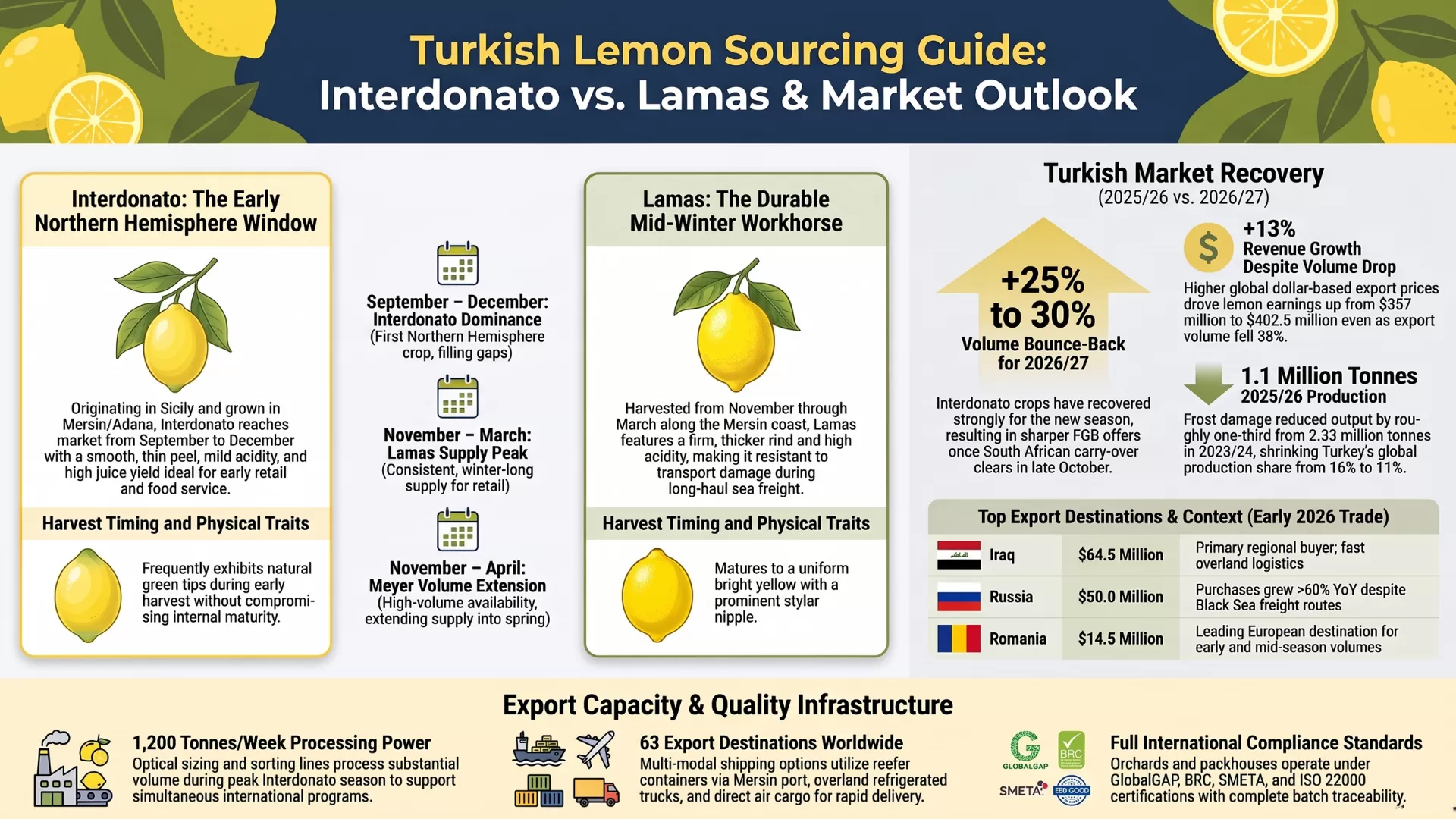
If you've been searching for a reliable source of premium lemons from one of the world's most celebrated citrus belts, you've landed in exactly the right place. Turkey isn't just another name on the lemon map — it's consistently ranked among the top five global producers of lemons and limes, with annual production volumes running between 1.5 and 2 million tonnes in recent years. That's a staggering amount of citrus, and much of it comes from the sun-drenched Mediterranean coastal zones of Mersin, Adana, and Hatay. Whether you're a wholesale importer, a food processor, or someone deeply involved in the vegetable export business, understanding the two star lemon varieties Turkey has to offer — Enterdonato and Lamas — can genuinely transform your sourcing strategy.
Your Complete Bulk Guide to Enterdonato and Lamas Lemon in Turkey
Turkey's lemon production is heavily concentrated in the Çukurova region, and the two varieties we're focusing on today — Enterdonato and Lamas — each bring something special to the table. Before we dive deep into the details of each variety, here's a quick side-by-side look at how they compare at a glance.
| Feature | Enterdonato Lemon | Lamas Lemon |
|---|---|---|
| Origin | Italian (Sicilian), adapted in Turkey | Lamas district, Mersin, Turkey |
| Harvest Season | August – October | Late autumn – winter |
| Rind Thickness | Thick, albedo-rich | Thin to medium |
| Shelf Life | Long (ideal for export) | Moderate to good |
| Primary Markets | Europe, Russia, processors | Domestic + regional export |
| Best Use | Fresh, processing, essential oils | Fresh consumption, juice |
What Makes Enterdonato Lemon in Turkey So Special
The Enterdonato lemon is originally an Italian variety, tracing its roots back to Sicily. What makes it stand out is its elongated shape, thick peel, notably low seed count, and a zest that's intensely aromatic — qualities that have made it a favorite in both fresh markets and processing industries. When you look at in turkey enterdonato lemon production, you'll notice that Turkish growers in the İzmir and Mersin regions have done an excellent job adapting this Mediterranean variety to their local conditions, particularly for export markets that demand extended shelf life.
One thing buyers consistently appreciate about Enterdonato is that distinctive protruding apex — that little nipple at the tip of the fruit — along with a smooth to slightly ribbed surface. More importantly, the thick albedo layer acts like a natural protective buffer, giving the fruit a significantly longer shelf life. For anyone involved in the vegetable import export business who needs lemons that can handle long-haul shipping without quality loss, this variety is practically purpose-built for the job.
Harvest Window and Market Timing
One of Enterdonato's biggest commercial advantages is its early harvest window. In the Eastern Mediterranean, including Turkey, the harvest typically kicks off in late summer and runs through early autumn — roughly August through October. This means Enterdonato hits the market well ahead of the main Eureka or standard Interdonato seasonal window, giving buyers an early-season supply option when premium pricing is still high and competition from other origins is lower. For importers looking to plan seasonal inventory, this timing is genuinely valuable.
Certifications and Compliance for EU Buyers
If you're importing into the European Union, compliance isn't optional — it's the baseline. GlobalG.A.P. certification and adherence to EU MRL (Maximum Residue Level) regulations under EU Regulation 396/2005 are increasingly standard requirements from European buyers. Reputable Turkish exporters targeting the EU bulk lemon market are well aware of this, and established suppliers carry the necessary certifications to ensure smooth customs clearance without headaches.
Understanding Lamas Lemon in Turkey
The Lamas lemon gets its name from the Lamas district within Mersin Province — a place historically known as Limonlu during Hellenistic and Byzantine times, which literally translates to "the lemon place." That kind of deep-rooted citrus heritage tells you everything you need to know about how naturally suited this region is to growing lemons. The Mediterranean microclimate here, characterized by mild winters and long sunny growing seasons, creates ideal conditions for producing lemons with excellent juice content, bright yellow color at maturity, and a thin-to-medium rind that consumers love.
When you explore in turkey lamas lemon sourcing options, you'll find that these lemons are well-regarded not only in Turkish domestic markets but also in regional export markets. The Mersin province, home to Lamas, also encompasses other recognized lemon cultivation sub-districts like Silifke, Erdemli, and Anamur — each with its own microclimate nuance contributing to Turkey's overall lemon export volumes destined for Europe, Russia, and the Middle East.
Juice Quality and Fresh Market Appeal
What Lamas lemon buyers most often rave about is juice content. The thinner rind means a higher proportion of the fruit is actually juice-bearing flesh, which is great news for processors producing lemon juice, preserved lemons, or citric extracts. For fresh market buyers, the vibrant yellow color and clean flavor profile make these lemons visually appealing and commercially competitive on supermarket shelves.
Bulk Sourcing: Formats, Pack Options, and Logistics
Understanding pack formats is crucial when you're planning a bulk buy. Turkish lemon exports are conducted in several trade formats depending on buyer needs. Smaller retail-friendly packs typically run at 3–5 kg net, while wholesale cartons go up to 10–15 kg. For large industrial buyers — think juice processors, essential oil manufacturers, or food preservation companies — bulk bins ranging from 700 kg to 1,000 kg are the dominant format. If you're exploring bulk enterdonato lemon options, working with a supplier who can accommodate these different formats and adapt to your specific labeling and packaging requirements is non-negotiable.
For those researching seasonal planning in more detail, this resource on bulk Enterdonato lemon and Lamas lemon farm seasons offers a useful breakdown of what to expect month by month from Turkish groves.
| Pack Format | Net Weight | Best For |
|---|---|---|
| Retail Carton | 3–5 kg | Supermarkets, retail chains |
| Wholesale Carton | 10–15 kg | Distributors, HoReCa |
| Bulk Bin | 700–1,000 kg | Juice processors, industrial buyers |
Why Turkey Is a Top-Tier Lemon Sourcing Destination
Countries involved in the top vegetable exporting countries conversation often highlight Turkey as a powerhouse, and for good reason. The combination of fertile Mediterranean soil, a long growing season, well-developed export infrastructure, and decades of trade experience makes Turkey an exceptionally reliable origin for lemon buyers worldwide. Turkish lemon exports flow primarily to EU countries, Russia, and neighboring Middle Eastern markets — routes that are well-established with efficient logistics chains already in place.
Frequently Asked Questions
-
What is the difference between Enterdonato and Lamas lemon?
Enterdonato is an Italian-origin variety with a thick peel, low seed count, and long shelf life — great for long-distance export. Lamas lemon is a locally celebrated variety from Mersin's Lamas district, known for higher juice content and a thinner rind, making it popular in fresh and processing markets alike.
-
When is the best time to buy Enterdonato lemons from Turkey?
The Enterdonato harvest in Turkey typically runs from August through October, making it one of the earliest lemon varieties available from the Eastern Mediterranean region. Booking early-season shipments gives buyers a competitive advantage in timing and pricing.
-
What certifications should I look for in a Turkish lemon exporter?
For EU-bound shipments, look for GlobalG.A.P. certification and compliance with EU MRL regulations under EU Regulation 396/2005. These are increasingly standard requirements for importers in European markets.
-
What bulk formats are available for Turkish lemons?
Turkish lemon exporters typically offer 3–5 kg retail packs, 10–15 kg wholesale cartons, and 700–1,000 kg bulk bins for industrial buyers. The right format depends on your end use — retail, distribution, or processing.
-
Which regions in Turkey produce the best lemons?
Mersin, Adana, and Hatay along the Mediterranean coast are the primary lemon-producing provinces. Within Mersin, the Lamas, Silifke, Erdemli, and Anamur sub-districts are particularly recognized for high-quality citrus cultivation.
About Eren — Decades of Citrus Expertise
Eren was founded back in 1993 in Mersin as a modest export company with a clear focus on citrus. What started with core markets in Russia and South Europe gradually grew into a global operation. After moving to a dedicated production facility in the Tarsus region in 2006, Eren expanded its reach to Southeast Asia, Canada, Africa, and Northern and Eastern Europe, growing its product portfolio to cover all fruits and vegetables available in Turkey. Today, Eren exports to 63 countries with over 60 product varieties, a team of 7 languages spoken in the sales department, and more than 1,000 personnel during peak season. With its own logistics division offering trucking, container, reefer, and air cargo solutions, plus in-house optical sizing and sorting technology and a dedicated quality control department, Eren is genuinely built for the demands of modern global trade.
Ready to connect with a lemon supplier that truly understands your market? Reach out today and let the team at Eren show you exactly why buyers across 63 countries trust them with their citrus sourcing needs. Whether you're after early-season Enterdonato or the juicy Lamas variety in bulk, the expertise and infrastructure are right here waiting for you.