 Lemon
 Mandarin
 Orange
 Grapefruit
 Fruits
 Vegetables
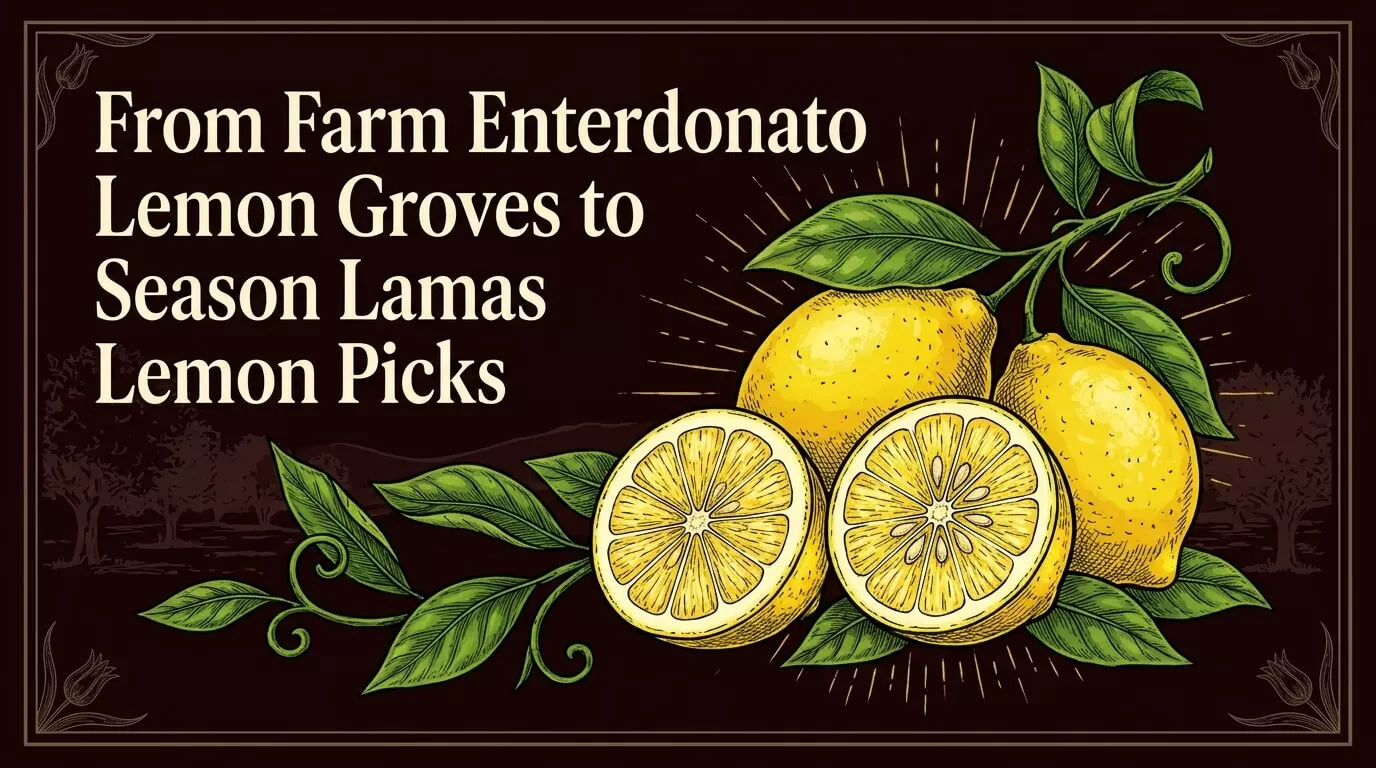
From Farm Enterdonato Lemon Groves to Season Lamas Lemon Picks
Turkey has long been recognised as one of the most productive citrus-growing nations in the world, and rightfully so. From the sun-drenched coastal plains of Mersin to the fertile river valleys of Adana and Hatay, Turkish lemon cultivation represents a tradition rooted in agricultural excellence. When international buyers explore the world of Turkish citrus, two variety names come up consistently: the Enterdonato and the Lamas. Understanding these two varieties — where they come from, when they are harvested, and how they reach global markets — is essential for any serious produce buyer or trade professional engaged in the vegetable export business.

Understanding Farm Enterdonato Lemon and Season Lamas Lemon from Turkey
The story of Turkish lemons is inseparable from the geography of the Çukurova region. Mersin province, in particular, accounts for a dominant share of Turkey's total citrus exports. According to data from the Turkish Statistical Institute, the country's primary lemon-producing zones include Mersin, Adana, Hatay, Antalya, and İzmir. Each region contributes to a seasonal supply chain that provides fresh lemons to European markets, Russia, the Middle East, and beyond. Turkey consistently ranks among the top five lemon and lime exporters globally, with EU markets and Russian destinations receiving the largest volumes.
For buyers involved in turkish fruits and vegetables exporters networks, Turkey's ability to supply lemons across an extended calendar year — from late summer through spring — is a significant trade advantage. This extended window is made possible by the complementary harvest periods of two distinct varieties: the early-season Enterdonato and the mid-to-late season Lamas.
The Origins and Character of Farm Enterdonato Lemon
The Enterdonato, also written as Interdonato, is a lemon variety with roots in 19th-century Sicily. It was named after Colonel Giovanni Interdonato, a Sicilian patriot, and first cultivated in Messina. Botanically, it is believed to be a hybrid between a lemon and a citron, which explains its distinctive elongated shape and notably low seed count. The Slow Food Foundation for Biodiversity has even included this variety in its Ark of Taste, recognising it as a heritage food product with exceptional characteristics. Its pale yellow rind, smooth-to-slightly-rough texture, and near-seedless interior make it a premium early-season offer.
Today, the farm enterdonato lemon is grown extensively in Turkey's Mersin and Adana regions, having adapted well to the Mediterranean climate of the Çukurova plains. It is harvested typically between August and October, positioning Turkish exporters to fill a critical supply gap in European markets when other major lemon origins such as Spain and Argentina are either transitioning between seasons or experiencing reduced output.
| Characteristic | Enterdonato Lemon | Lamas Lemon |
|---|---|---|
| Origin | Sicily, Italy (now grown in Mersin, Turkey) | Mersin / Lamas district, Turkey |
| Harvest Season | August – October (Early) | November – April/May (Mid to Late) |
| Rind | Slightly rough, pale yellow | Thin, smooth, bright yellow |
| Seed Count | Near-seedless | Low seed count |
| Juice Content | High | High |
| Primary Markets | Europe, Russia, Middle East | EU, Eastern Europe, Russia |
Season Lamas Lemon: The Backbone of Turkish Citrus Trade
While the Enterdonato commands attention as an early-season novelty with heritage status, the Lamas lemon is the true commercial workhorse of Turkish citrus exports. Named after the Lamas district and the Lamas River area within Mersin Province, this variety was developed and selected within Turkey's own agricultural landscape. It is botanically classified within the Citrus limon species and is sometimes grouped under broader Turkish classifications, though "Lamas" remains the specific commercial name used in international trade.
The season lamas lemon is prized for its thin skin, high juice yield, and vibrant bright yellow colour at full maturity. Its primary harvest window runs from November through April and May, making it a vital source of fresh lemons during the autumn, winter, and spring months. This harvest calendar directly complements the Enterdonato season, ensuring that Turkish exporters can maintain a near-continuous supply of fresh lemons to international buyers throughout the year. Buyers engaged in fruits and vegetables import export whatsapp group discussions frequently reference Lamas lemons as a reliable, consistent commodity with broad market acceptance.

Why Buyers Prefer Lamas Lemons for Bulk Procurement
The Lamas lemon's commercial appeal goes beyond its organoleptic qualities. Its thin skin makes it highly suitable for juicing operations, while its uniform size and consistent colour response to cold chain management make it attractive for retail packaging. The Mersin region, which produces a dominant share of Turkey's Lamas output, benefits from proximity to Mediterranean shipping routes, reducing transit times to key European and Middle Eastern destinations. For procurement professionals comparing bulk enterdonato lemon or farm lamas lemon options, the Lamas variety often represents the more scalable and cost-efficient choice for large-volume orders during the winter and spring windows.
How the Two Varieties Work Together in Export Planning
Experienced importers and distributors understand that sourcing from Turkey is not an either-or decision between Enterdonato and Lamas. The two varieties are strategically complementary. A well-structured annual supply agreement with a Turkish exporter can cover the early season with Enterdonato fruit from August through October, then seamlessly transition into Lamas supply from November onwards. This approach eliminates supply gaps, reduces dependency on competing origins, and allows buyers to build strong, year-round commercial relationships with a single trusted supplier.
Company Lamas Lemon Exports and the Role of Trusted Turkish Producers
When it comes to selecting a supplier for Turkish lemons, reliability, infrastructure, and market experience are non-negotiable. The company lamas lemon export sector in Turkey is served by a number of established producers, but few carry the depth of experience found at operations like Fresh Anatolia, which is backed by Eren — a company established in Mersin in 1993 as a citrus-focused export firm.
Over the decades, Eren expanded from serving Russian and Southern European markets to reaching 63 countries across Southeast Asia, Canada, Africa, and Northern Europe. After relocating to a dedicated production facility in the Tarsus region in 2006, the company invested in optical sizing and sorting machinery, a dedicated quality control department, and software-based production monitoring. With over 60 product varieties and 7 languages spoken in the sales department, the company is structured to handle the complexities of diverse customs requirements and packaging preferences across international markets.
| Export Feature | Details |
|---|---|
| Countries Served | 63 countries worldwide |
| Product Varieties | Over 60 fresh fruits and vegetables |
| Languages at Sales | 7 languages spoken |
| Logistics Options | Trucking, Container, Reefer, Air Cargo |
| Own Production | Citrus gardens and cherry orchards |
| Peak Season Staff | Over 1,000 personnel |
Logistics and Quality Standards in Lemon Exports
One of the defining factors that separates professional Turkish lemon exporters from smaller operators is the sophistication of their logistics infrastructure. Eren operates its own logistics department capable of providing trucking, container shipping, reefer transport, and air cargo solutions. A dedicated air cargo division with its own research and development function ensures that time-sensitive shipments receive appropriate handling. INCOTERMS flexibility further supports buyers in different regions with varied trade preferences. For buyers comparing Turkish suppliers, these operational capabilities translate directly into reliable delivery schedules and product integrity upon arrival.
Grower-to-Exporter Traceability
Fresh Anatolia and its parent operation Eren are not merely trading intermediaries. The company grows its own citrus products, including lemons, through owned gardens in the Mersin region. This grower-to-exporter model provides a level of traceability and quality oversight that purely trading-based companies cannot replicate. When buyers request specific size grades, packaging formats, or labelling requirements, the integrated supply chain allows for direct communication from the field to the packing facility without reliance on third-party coordination.
Frequently Asked Questions About Turkish Lemon Varieties
What is the difference between Enterdonato and Lamas lemons?
The Enterdonato is an early-season variety harvested from August to October, originally from Sicily but now widely cultivated in Mersin, Turkey. It features a near-seedless profile and an elongated shape. The Lamas lemon is a mid-to-late season Turkish variety harvested from November through May, known for its thin rind, bright colour, and high juice content. Together they cover complementary harvest windows.
When is the best time to buy Lamas lemons from Turkey?
The primary commercial season for Lamas lemons runs from November to April or May. During this period, supply volumes are at their highest and quality is most consistent. Buyers seeking a reliable supply for the winter and spring months should arrange contracts with Turkish exporters ahead of the November harvest commencement.
Is Turkey a reliable source for bulk lemon imports?
Yes. Turkey ranks consistently among the top five global exporters of lemons and limes. The Mersin region alone supplies significant volumes to the EU, Russia, Eastern Europe, and Middle Eastern markets. With established infrastructure, experienced exporters, and two complementary lemon varieties covering most of the calendar year, Turkey represents one of the most dependable sources for bulk fresh lemon procurement.
Can I source both Enterdonato and Lamas lemons from a single Turkish supplier?
Yes. Several Turkish exporters, including Fresh Anatolia, supply both varieties and can structure annual supply agreements that transition smoothly between the early Enterdonato season and the longer Lamas season. This consolidated sourcing approach is increasingly preferred by importers looking to simplify procurement while maintaining supply continuity.
What packaging and logistics options are available for Turkish lemon exports?
Professional Turkish exporters offer a wide range of packaging formats, including standard cartons, net bags, and custom retail-ready packaging. Logistics options typically include refrigerated containers, reefer trucks, and air cargo for premium or time-sensitive orders. INCOTERMS flexibility — from EXW to CIF and beyond — is standard among experienced exporters serving 63 or more international markets.
Connecting With the Right Turkish Lemon Supplier
The citrus trade is built on relationships, consistency, and trust. Whether a buyer is entering the Turkish lemon market for the first time or seeking to optimise an existing supply chain, the selection of the right exporter is the most consequential decision in the process. Fresh Anatolia, backed by Eren's three decades of institutional export experience, represents exactly the kind of partner that international buyers require — a grower, packer, and exporter with the infrastructure, market knowledge, and product range to meet diverse commercial demands year-round. With operations rooted in Mersin's premier citrus-growing landscape and a commitment to quality that has earned recognition across 63 markets, the company stands ready to serve buyers at every scale of operation.
We invite you to connect with Zupricer today to explore how Turkish Enterdonato and Lamas lemon sourcing can be structured to meet your specific volume, timing, and quality requirements. Reach out to begin a conversation about reliable, year-round lemon supply from Turkey's most trusted growing regions.